How to Start Email Marketing for Your Women’s Health Coaching Business (Even With a Small List)

Article Summary
Email marketing helps women’s health coaches stay connected with potential clients, build trust, and support the journey from interest to discovery calls. You don’t need hundreds of subscribers to get started. This beginner-friendly guide explains how to choose an email platform, grow your list, write your first welcome email, and create a manageable sending routine—even if you’re starting from zero.
You’ve probably told yourself more than once that you need to start emailing people.
Maybe you’ve been posting on Instagram, you have a coaching website, and a few people have signed up for your free resource. But your email list? That’s another story.
Maybe you have 20 subscribers who haven’t heard from you in months. Maybe you’ve collected a handful of email addresses but have no idea what to send them. Or maybe you haven’t started a list at all.
And then there’s the question almost every beginner asks: Is email marketing even worth doing when my list is this small?
Yes. And you don’t need to become an email marketing expert to get started.
You need a simple way to stay connected with women who are interested in your coaching services, including those who aren’t ready to book a discovery call yet.
Here’s how to get started without adding another complicated project to your already full plate.
Why Email Marketing Matters for Women’s Health Coaches
Imagine a woman who’s been struggling with weight changes, poor sleep, and low energy during perimenopause.
She’s following a few menopause coaches on Instagram. She’s saved posts about nutrition and lifestyle habits. She’s even visited your website.
But she hasn’t booked a discovery call.
Maybe she’s wondering whether coaching will be worth the investment. Maybe she’s tried several approaches already and doesn’t want to be disappointed again. Or maybe she has too much going on this month to make another commitment.
She’s interested. She’s just not ready.
That’s an important distinction. I call it the Consultation Gap™ : the space between someone becoming interested in your services and feeling ready to take the next step.
Email gives you a way to answer questions, explain your coaching approach, and help potential clients understand what working with you involves.
Social media might introduce someone to your business. Your website explains what you offer. Email lets you continue the conversation after she closes Instagram or leaves your website.
Can You Start Email Marketing With a Small List?
Absolutely. A small list can be a useful place to learn what resonates with your audience and get comfortable sending emails.
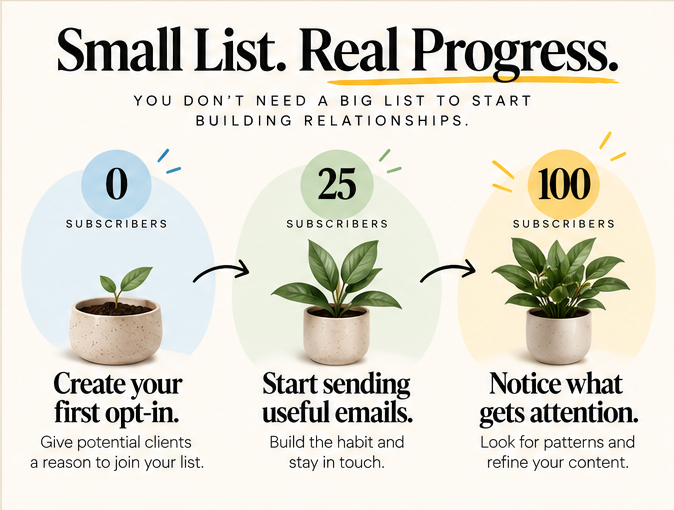
If you have zero subscribers
Focus on creating one good reason for someone to join your list. It might be a short guide, checklist, or interactive quiz addressing a question your ideal client already has. You don’t need five different freebies or an elaborate funnel.
If you have 5 to 25 subscribers
If these subscribers have agreed to receive marketing emails, start communicating with them. Send an email answering a question you hear frequently during discovery calls or coaching sessions. You might not receive many replies or clicks yet, and that’s normal.
If you have 25 to 100 subscribers
Keep sending useful emails and begin noticing what gets attention. Are people clicking through to your coaching services? Replying with questions? Reading particular articles? Use those signals to decide what to write about next, without overinterpreting small numbers.
You don’t need a big list to start building relationships. What matters is giving people a genuine reason to stay connected.
Step 1: Choose an Email Marketing Platform
Before you can send emails, you need somewhere to collect and manage subscribers. An email marketing platform lets you create signup forms, send messages, and automatically deliver emails to new subscribers.
A few options worth exploring:
- MailerLite: Signup forms, email campaigns, and basic automations in a relatively straightforward interface.
- Kit: Subscriber management and email sequences for creators, coaches, and service-based businesses.
- Mailchimp: Email campaigns, signup forms, and automation tools.
You don’t need the platform with the most features. Look for one that lets you collect subscribers, send regular emails, automate a welcome message, and manage consent and unsubscribes.
Privacy note: If your coaching business handles sensitive health information, use appropriate privacy safeguards. Don’t collect private medical details through ordinary marketing forms. Follow the privacy and marketing requirements that apply to your business.
Do you need email automation right away?
Not much. Start with one automated welcome email that goes out when someone subscribes, so the resource she requested arrives without you sending it manually.
When you’re ready to go further, read Email Automation for Beginners . For now, keep the setup simple.
Step 2: Give Potential Clients a Reason to Join Your Email List
Before creating your signup form, ask yourself: Why would someone want another email in her inbox?
She probably isn’t looking for another generic wellness newsletter. But she may be searching for answers to something that’s been bothering her for months.
Start with questions your coaching clients already ask
A menopause coach might hear, “Why does managing my weight feel so different now?” A PCOS nutrition coach might hear, “How do I know which nutrition changes are worth focusing on?” A wellness coach might hear, “How do I get started when everything feels overwhelming?”
These questions can become useful free resources, sometimes called lead magnets.
| Coaching specialty | Free resource idea |
|---|---|
| Menopause coach | Five questions to consider about midlife weight changes |
| PCOS nutrition coach | A beginner’s guide to building sustainable nutrition habits |
| Hormone health coach | Questions to discuss with your healthcare provider about hormone-related concerns |
| Women’s wellness coach | A worksheet for identifying your wellness priorities |
Try this five-minute exercise.
Think about the last three questions someone asked before booking a discovery call. Write them down. Could you answer one in a short email or free resource? You may already have your first few content ideas.
Your free resource doesn’t have to be a PDF
Guides and checklists can work well, but they’re not your only options. An interactive quiz can help someone explore a question she’s already asking.
For example, a woman researching midlife weight changes might take an educational quiz about the concerns she wants to understand better. The quiz can share relevant information and suggest questions to discuss with a qualified professional, without diagnosing a condition or promising an outcome.
At the end, she can choose to receive additional educational emails. That gives you an opportunity to continue the conversation. I’ll share a quiz example at the end of this article.
Where should you promote your signup?
Start with your website, relevant blog posts, service pages, and social media profiles. Match the resource to the topic: someone reading about perimenopause may be more interested in a related guide than a generic “subscribe for updates” invitation.
Be clear about what subscribers are agreeing to receive, and follow through on that promise.
Step 3: Write Your First Welcome Email
You’ve chosen your platform and created a way for people to subscribe. Now comes the part that makes many coaches hesitate: What am I supposed to say?
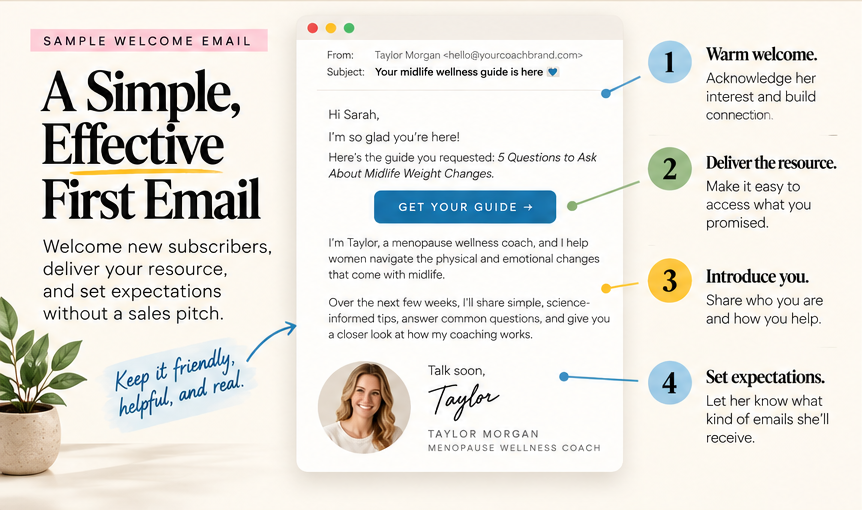
Your welcome email should arrive soon after signup and do four things:
- Remind her what she signed up for.
- Deliver the resource you promised.
- Introduce yourself and your coaching approach.
- Explain what kinds of emails she’ll receive.
You don’t need to explain every coaching package or ask her to book a call immediately.
Sample welcome email for a menopause coach
Subject: Your midlife wellness guide is here 💌
Hi Sarah,
Here’s the guide you requested!
[Get Your Midlife Wellness Guide]
If you’ve been noticing changes in your energy, sleep, or weight lately, I hope this gives you a helpful place to start.
I’m Taylor, a menopause wellness coach. I work with women navigating the changes that come with this stage of life.
We’ll talk about nutrition habits, everyday stress, and realistic ways to support your well-being. I’ll also share more about how my coaching works, so you can decide whether it’s something you’d like to explore.
For now, enjoy the guide. And if there’s a topic you’d love me to cover, feel free to reply.
Talk soon,
Taylor
No elaborate design. No lengthy explanation of every service. Just a useful introduction and a reason to keep reading.
What should you send after the welcome email?
You don’t need a polished newsletter with graphics, multiple sections, and an announcement every time. Start with three types of emails:
- Explain something. For example, “Why can building consistent nutrition habits feel harder during perimenopause?” Offer practical, evidence-informed considerations within your coaching scope.
- Explain your coaching process. For example, “What happens during your first health coaching session?” Describe what you discuss, how goals are established, and what ongoing support looks like.
- Help someone make a decision. For example, “How do you know whether one-on-one coaching is right for you?” Explain who your program is designed for and what a prospective client should consider before investing.
None of these requires a special promotion. You’re helping potential clients understand their options.
If you already have subscribers but few discovery calls, read Why People Join Your Email List But Never Book for a closer look at what can happen between subscribing and booking.
Step 4: Create an Email Routine That Fits Your Coaching Business
Between coaching sessions, client support, and running your business, you probably don’t have hours to spend writing emails every week. You don’t need to.
I’d rather see you start with one useful email every two weeks than plan an ambitious weekly newsletter you abandon after a month.
Keep a running list of email ideas
Whenever someone asks about your services, jot down the general question—not private client information. Maybe she wants to know how your program differs from a nutrition plan, how much time coaching takes, or what happens after a discovery call.
Use a simple email-writing formula
Question → Explanation → Helpful next step
Question: What happens during a menopause coaching discovery call?
Explanation: Walk through the conversation and how you assess fit.
Next step: Invite readers to visit your discovery call page if they’d like to learn more.
One question. One useful explanation. One clear next step. Not every email needs to end with an invitation to book; sometimes a resource or article is the better next step.
Keep the design simple
A conversational email with short paragraphs and a clear message can work well for a coaching business. Write the way you’d explain something to a prospective client. Keep it accurate, approachable, and easy to read on a phone.
Your First 30 Days of Email Marketing
Here’s a manageable plan for your first month.
| Week | Your focus | What you’ll accomplish |
|---|---|---|
| 1 | Choose an email platform and create a signup form | A way for people to join your list |
| 2 | Create one useful free resource | A reason for potential clients to subscribe |
| 3 | Write and automate your welcome email | A consistent first interaction |
| 4 | Send your first educational email | The beginning of a regular email routine |
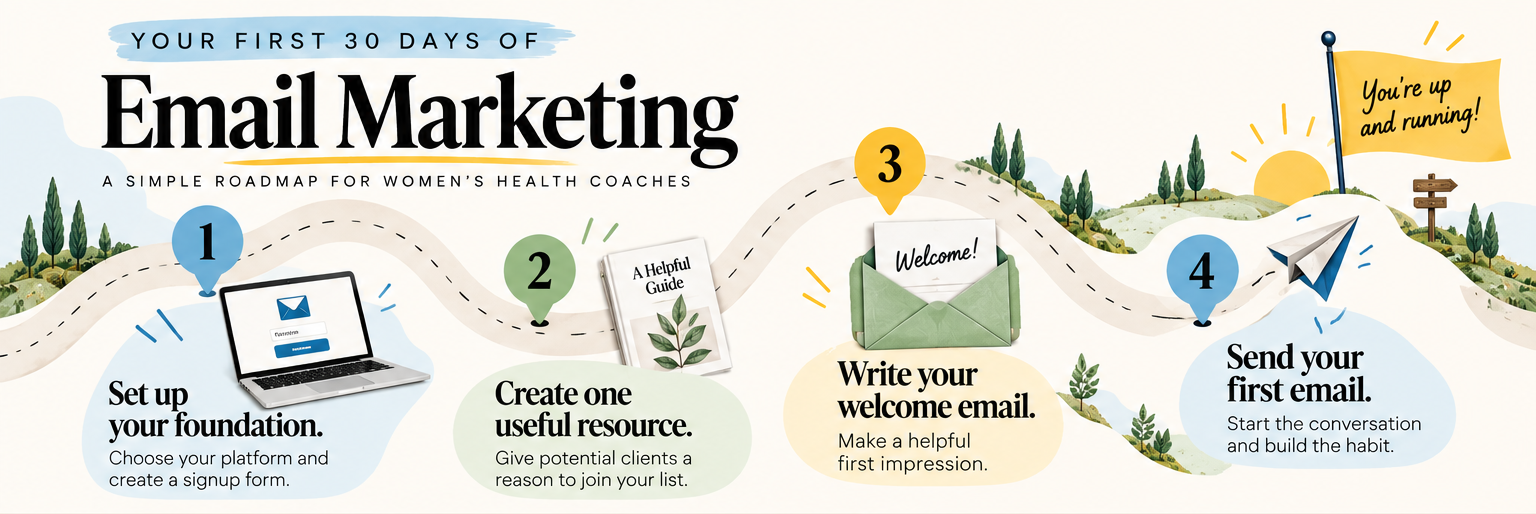
By the end of the month, you’ll have the basic pieces in place. You can improve your signup experience, expand your welcome sequence, and introduce more strategic follow-up later. You don’t have to build everything at once.
Frequently Asked Questions About Email Marketing for Women’s Health Coaches
What is email marketing for women’s health coaches?
It’s a way for women’s health coaches to communicate with people who have agreed to receive their emails. Messages might include educational content, welcome sequences, resources, and information about coaching. Email can help potential clients understand your services and decide whether to book a discovery call.
How do I start an email list for my health coaching business?
Choose an email platform, create a signup form, and offer a useful reason to subscribe, such as a guide, checklist, or educational quiz. Add the signup form to your website or relevant content, and explain what subscribers will receive.
How many subscribers do I need before I start email marketing?
There’s no minimum. You can start with five, ten, or twenty people who have given you permission to receive marketing emails. Focus on relevant content and a sustainable routine instead of an arbitrary list size.
What should a women’s health coach send in her first email?
Welcome the subscriber, deliver the promised resource, briefly introduce your coaching business, and explain what to expect from future emails. Keep it conversational and focused on a helpful first impression.
How often should health coaches send marketing emails?
One useful email every two weeks can be a manageable starting point. Adjust your frequency based on your capacity, your subscribers’ expectations, and how people respond.
What are good email topics for menopause and hormone health coaches?
Common wellness questions, sustainable lifestyle habits, what happens during coaching, how your approach works, and what to consider before choosing a program. Keep educational content within your professional scope and avoid unsupported medical claims.
Can email marketing help health coaches get more clients?
Email marketing can support client acquisition by explaining your approach, answering common questions, and helping subscribers evaluate whether coaching is a good fit. Results depend on audience relevance, your offer, and the overall client experience.
Do I need an email automation system to start?
No. A signup form, one automated welcome email, and regular educational messages are enough to begin. You can add more complex sequences later.
What’s the difference between an email list and a welcome sequence?
Your email list is the group of people who’ve subscribed. A welcome sequence is a series of messages automatically sent after signup to deliver a resource, introduce your approach, and help new subscribers get oriented.
What if nobody opens or replies to my emails?
Check that people opted in and that your emails are being delivered. Then review whether your subject lines and topics match their interests. Engagement percentages can be misleading with a tiny list, and open rates are imperfect, so look for patterns over time rather than reacting to one send.
Your Email List Doesn’t Have to Be Big to Be Useful
If you’ve been putting off email marketing because your list feels too small, I hope this gives you a more practical way to approach it.
You need a way for interested women to find you, a reason for them to stay connected, and useful information that helps them understand your coaching approach.
Getting someone to subscribe and helping her feel ready to book are two different parts of the relationship. The signup introduces her to your business. What happens afterward can help her decide whether working with you makes sense.